
Testing Tropical Pastures in
Southern NSW
Holbrook Landcare Network’s MLA funded Producer Demonstration Sites (PDS) are investigating how tropical pasture species can be incorporated into southern NSW grazing systems to utilise summer rainfall.
Why?
The Southern slopes of NSW has a winter dominant rainfall pattern but with a changing climate, it’s now experiencing more summer rainfall.
That provides opportunity for using tropical pastures like Digit grass, Kikuyu and Rhodes grass to make better use of that summer rain.
The aim is to complement the winter perennials and annual species that are traditionally used in grazing systems to:
- Boost production of higher quality feed in late spring, summer and autumn
- Provide green feed over summer
- Reduce supplementary feeding
- Improve livestock growth over summer
- Increase the feed base ahead of winter
- Help displace annual summer weeds
- Complimentary rotation for Lucerne paddocks
For more information contact Steph Cowley on 0467 025 777 or [email protected]
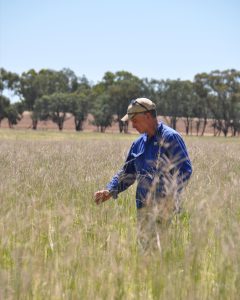
Demonstration Sites
Producer Demonstration Sites (PDS) are assessing the use of tropical pastures in beef and lamb production systems, testing different management practices, and building producers’ knowledge about what adaptations are needed to successfully incorporate them into southern grazing systems.
Yerong Creek PDS Dry matter production and quality of a Digit grass and Kikuyu mix and the impact on liveweight gain on merino and crossbred sheep.
Henty 1 PDS Performance of a 2021 sown digit grass stand and the role it plays in an angus cattle operation for both breeder and weaner weight gains.
Henty 2 PDS Investigating the performance of a Premier Digit and Serradella pasture as a companion species to determine its role in supporting the feed base via dry matter production.
What we've seen so far
- Tropical pasture species can be good options for livestock maintenance and growth over summer.
- Tropical pastures don’t produce the same livestock growth rates as lucerne but they have performed well on ‘secondary’ country (lighter soils and hill country) where temperate species struggle.
- Wetter than average season in 2022 and 2023 saw established sub-tropical pastures perform well showing the production potential of these species.
- Investment in tropical pastures over-sown with temperate legume pastures can deliver good results on investment but is dependent on livestock management.
Project Reports
A 2023 trial of applying Gibberellic Acid and Urea to a still active tropical pasture in winter shows no increase in tropical pasture production but it did increase production of temperate species.
Project Photo Gallery
Resources
Videos
Tropical grasses for southern environments – Sue Boschma (DPI) Riverina Pastures Research Update
https://www.youtube.com/watch?v=QKLM8wsKuo0
NSW DPI tropical grass webinar series:
- Successful establishment in southern NSW (1)
https://www.youtube.com/watch?v=TbVrZa7dEUA
- Tropical grass development 2021 (2)
https://www.youtube.com/watch?v=MDS21lH2yCQ
- Barenbrug tropical research overview
https://www.youtube.com/watch?v=A-UWZB3uxlw
Farmer video
Reading
Increase feedbase production and quality of subtropical grass based pastures report